Showing posts with label Anne Lessard. Show all posts

Monday, February 23, 2015

It Takes Many Societies to Make a Utopia

            Like Taylor, I find myself liking qualities from Both Bellamy and Morris’ futuristic ideas; however, I seem to slightly enjoy more of Morris’ ideas. The idea I enjoy above all is that of work. Morris says, “We are not short of wealth, there is a kind of fear growing up amongst us that we shall one day be short of work. It is a pleasure which we are afraid of losing, not a pain”(1232). Having this mindset completely changes everyone’s life. Looking forward to going to work and enjoying your job makes you appreciate your life a lot more and understand the value of hard work and the value of doing what you love. Frankly, I think our society should be more like this. Yes, we are encouraged to do what we love, but I cannot tell you how many people have told me “So an English degree, how will you make money?” Yes, I hope to have a rather high salary, but I believe doing what I love will be more rewarding than money. Aside from my small rant, Morris’ people also have the idea that, “instead of avoiding work, everybody seeks it” (1325). This would help to have all jobs fulfilled and a very successful, high functioning society.
            Though I really enjoyed Morris’ ideas, I found myself very intrigued with Bellamy trying to restore the old system of living in his society with a new way of life. On page 30, Bellamy explains that this new system would have, “more individual dignity and freedom, but it would be at the price of general poverty and the arrest of material progress.” I think that it is good to have a society (much like our own) that has individual dignity and freedom but poverty should not be the price to pay for being free. Perhaps Bellamy could find a way to combine his ideas with Morris, such as the value of money (or lack there of), so people could have some sort of freedom without living in complete poverty. In addition, people may realize that being materialistic isn’t necessary to have a good life, and perhaps they could focus more on the non-materialistic benefits they are rewarded with as they work.

            While reading both texts I also found that many ideas prevalent in both societies were similar to ideas I enjoyed from Thomas More’s “Utopia.” One example of this is the idea of “no money or obvious exchanges” (1088). In our society today, much of what we do is greatly influenced by money. In both of these societies, money does not dictate how these people live and enjoy their lives (which I think is wonderful!!).  In addition to money not having value, there is no buying and selling of goods, which for the most part takes away classicism. Lastly, as I previously explained, Morris’ society really appreciates and values their work, just as the people do in “Utopia.” Perhaps the BEST society could combine ideas from Bellamy, Morris AND More’s ideal societies.

Monday, February 9, 2015

Am I in Sunday School?

When I first started reading “Rule of St. Benedict” I could have sworn I had accidentally picked up the Bible. While reading Chapter Four, I felt like I was back in Sunday school reading the Ten Commandments, except instead of ten there is a list of 72 “instruments of good work”. Just to be a little different from everyone else, I thought I’d highlight some of the points St. Benedict made that I actually really like (yes there are many that remind me of the City of God and I am not completely in favor of, but there were quite a lot of points that I thought would make a sufficient society). For starters, how about no meat? Addie? In Chapter 39 he says, “Let all abstain entirely from eating the flesh of four-footed animals.” In addition, he says that people should not over-indulge. Though some may see this as people not eating enough, I see it as a good thing. Perhaps it’s hard to understand because in our culture today people eat quite a lot and obesity is rapidly increasing, but eating just enough would help people stay healthy and make sure everyone gets food.
            Now let’s talk about social structure. Yes, people have certain jobs to obtain to, but there isn’t really much of a power imbalance. The young are to respect their elders, but they are not necessarily less important in the society. Early on in the chapter one he says, “whether slaves or free, we are all one in Christ.” This being said, everyone is on somewhat of an equal playing field, at least more so than in St. Augustine’s version of society. He also says, “let no one in the monastery follow his own heart’s fancy” (Chapter 3). Benedict believes that rather than doing his or her own will, everyone must do the will of God. I suppose this takes away individuality, but at the same time, if the Utopia of the afterlife is something everyone in the society is striving for, wouldn’t it make sense to work together to achieve it? And if everyone does similar things and shares the same beliefs wouldn’t that make it easier too?

            Back to the Utopia real quick…does Benedict ever use the words “Heaven” or “afterlife”? I could be completely mistaken and oblivious, but I did not see these words appear in the text, at least not frequently. Yes, the Abbess “hold[ing] the place of Christ in the monastery” makes us aware that there is some other place where God must be, but Benedict doesn’t really mention Heaven itself (he refers to living for God but never says exactly where God lives). I couldn’t tell if this was just supposed to be common sense (that he is talking about Heaven) or if perhaps it was purposeful. He never really mentions that there is a place that they are hoping to get to, rather that they are just living for God. Is Utopia Heaven? Can there be a Heaven without a Hell?

Monday, January 26, 2015

Socrates Talking to Himself About Nature vs. Nurture

When I started reading “The Republic,” it seemed as if Socrates was talking to himself. As Hayley mentioned in her blog post, Socrates is “desperate to display his own intelligence.” I too think that he wants to show off how intelligent he is, so much so that it seems like he is talking to himself because his friend’s replies are some what of the “yeah yeah whatever you say just please shut up” nature. While I may have started reading with similar thoughts in my head as the responses of Adeimantus and Galucon, I gradually began to be interested in what Socrates was actually trying to say.
            Early on in the reading I came across a footnote that said “a city is a collection of people, not a collection of buildings” (14). Though this may seem like a simple concept to grasp, there’s actually quite a lot of depth to it. Rather than focusing on just the idea of Utopia as a whole, like in other readings, Socrates is diving into the specific details of the lives of the people who make up/create this society. Shortly afterward Socrates starts developing his plan by beginning with Maslow’s hierarchy of needs (defined in Noel’s previous post) realizing that people first need food and shelter then they can start thinking about their jobs and roles in the society.
            Toward the beginning of Book Three, Socrates starts to share ideas that remind me of the nature vs. nurture debate in psychology. On page 72 he says, “haven’t you noticed that imitations practiced from youth become part of nature and settle into habits of gesture, voice, and thought?” Socrates seems to be suggesting that children imitate many behaviors that they learn quickly at a young age, and continue many of these behaviors the rest of their lives. If this is the case, then he believes that from an early age, as they are creating this Utopia, the proper ideas need to be practiced and installed into people’s heads as to not create conflict in the future. Though I think this is a good idea, especially if you want a Utopia to remain a Utopia, I think Socrates has to keep in mind that many people act a certain way not solely because of their nurture but greatly because of their nature (how their genes are wired). This being said, Socrates can do all he wants to make his society perfect, but ultimately he cannot completely persuade people to do one thing or another because he cannot control their nurture.

            I do apologize for this post being a bit all over the place, but perhaps that makes it more like Socrates thoughts. Although I find many of his ideas quite insightful, I do not find them all plausible. Yes, over a great period of time society can drastically change, but does every individual change? Are people only acting a certain way because they are in this new society and think they all have to act a certain way? What would happen if you isolated people after years of trying to develop Socrates ideal society, would they go back to their old ways?

Wednesday, January 21, 2015

Better, Faster, Stronger


            When we were first asked to think of something that would make the world a better place I automatically thought of the cheesy quote from Miss Congeniality, “world peace.” Though I do think this is extremely important I thought it would be more valuable and interesting to talk about something different: sports. Watching sports games is one of America’s greatest pass times, but what about playing sports? As a kid, I tried almost any sport I possibly could (within the range of my mother’s budget of course). After years of being involved in multiple sports teams, I decided to play both lacrosse and swimming at the collegiate level. Both sports are very different but have taught me valuable lessons that I think would benefit a lot of people.
            So, my proposal is that everyone should be involved in some sort of physical fitness activity. This is asking quite a lot, and will not be easy, but is possible and could better many lives. Like I said earlier, I personally participate in two completely different sports, but enjoy them both very much and have learned beneficiary things from both. Lacrosse is a new and coming team sport (for those of you who don’t know, it’s the one where people run around with sticks and throw the ball into the net). Team sports such as lacrosse teach people many valuable lessons such as how to work with others to reach a common goal, how to motivate others and yourself and push each other past your limits and it gives people the opportunity to feel what it’s like to be a part of something bigger. Swimming is more of an individual sport. Yes, there are relays when people take turns swimming their butts off, but swimming is very much an individual sport. Swimming teaches you lessons that you can’t necessarily learn in a classroom. Above all, swimming and individual sports encourage self-motivation and teach people how to push themselves, believe in themselves, and want to be their best. As my Coach says far too often, “You can lead a horse to water, but you can’t make it drink.” Swimming and other individual activities teach you how to motivate yourself.
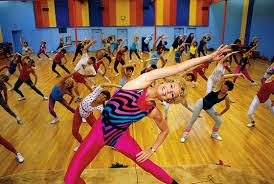
            In addition to all of the previously mentioned benefits of physical fitness, there is a more obvious very important reason to exercise: to benefit your health. Physical fitness is beneficial to people of all ages. It is proven to make you feel better and makes your body healthier both internally and externally. Okay, I may be slightly addicted to exercise, but please keep in mind I’m not saying you have to do something extreme like run a marathon or an iron man or be a professional athlete. All I’m saying is some sort of physical fitness, whether it be taking a long walk by yourself or a Zumba class with all of your friends, will benefit your life.
            How can we do this? Perhaps the best way is to start with children and work our way to adults. PE is required at most schools now. In addition, kids should be required to join a sports team or fitness club at their school. Having fitness clubs can be a lot less intimidating for young kids and a lot more fun. We need to encourage children that exercise is something fun to do! As kids get older it becomes a bit more difficult because some people simply aren’t interested in playing a sport. Since this may be the case for many, we need to spread awareness of all sorts of activities rather than just the typical football or soccer to spark peoples’ interests. Once kids turn into teenagers and young adults, they start to be more aware of their physical health. We need to spread more awareness of all of the benefits of physical activities, not just with your physical health but socially, emotionally and cognitively too. I know this isn’t something that can change over night, but I truly think people would be happier if they had more physical activity in their daily routine.